THE STORY OF MAYIBUYE CENTRE

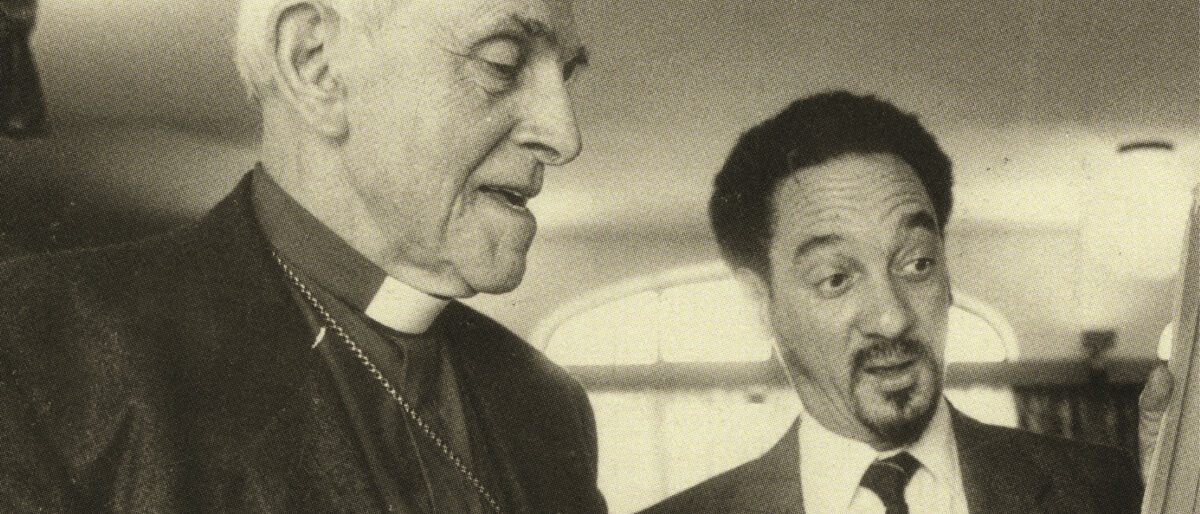 Prof Jakes Gerwel with veteran activist Father Trevor Huddelston
Late 1980s
In the late 1980’s, Prof Jakes Gerwel, then Rector of the University of the Western Cape, set up a Committee to explore the possibility of establishing a museum to chronicle the struggle against apartheid.
1990 - 1991
The Mayibuye Centre for History and Culture was set up between 1990 and 1991. The Centre would document and preserve multi-media records reflecting the impact of the Apartheid system and the resistance to it from within South Africa and beyond its borders.
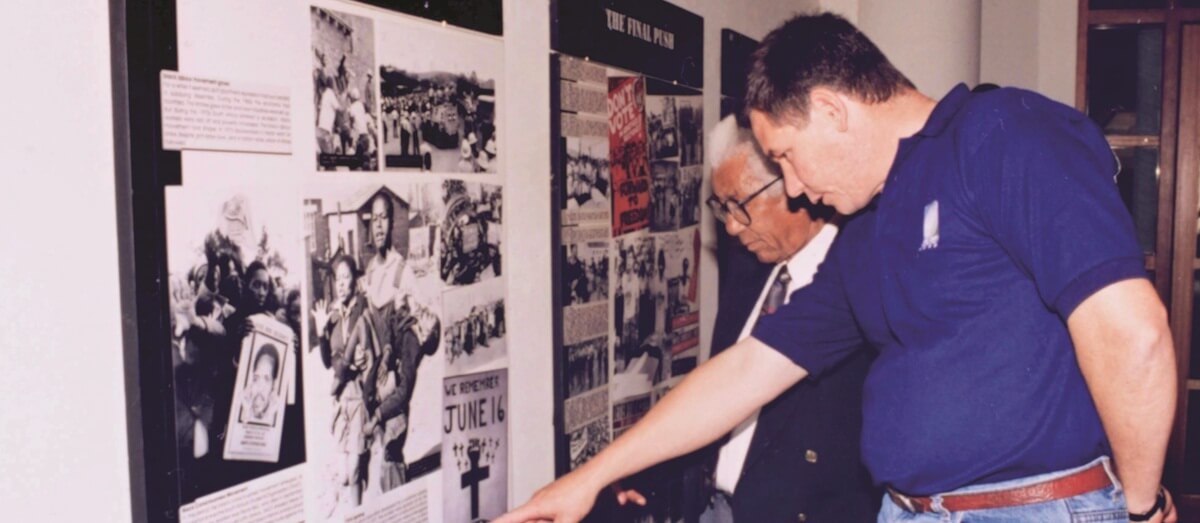 Director of the Mayibuye Centre, Prof Andre Odendaal with ANC Veteran and political prisoner, Walter Sisulu at the Mayibuye Centre.
 Public education material produced by IDAF Material / Newspaper clipping celebrating the transfer of IDAF material to SA
1992
After political organisations opposing apartheid were unbanned in 1990, the International Defence and Aid Fund (IDAF), based in London, closed its anti-apartheid operations. By 1992 the IDAF organisational records were transferred to the Mayibuye Centre, forming its core collection.
1992
The Mayibuye Centre also received numerous donations of material from other organisations and individuals involved in the liberation struggle, nationally and internationally.
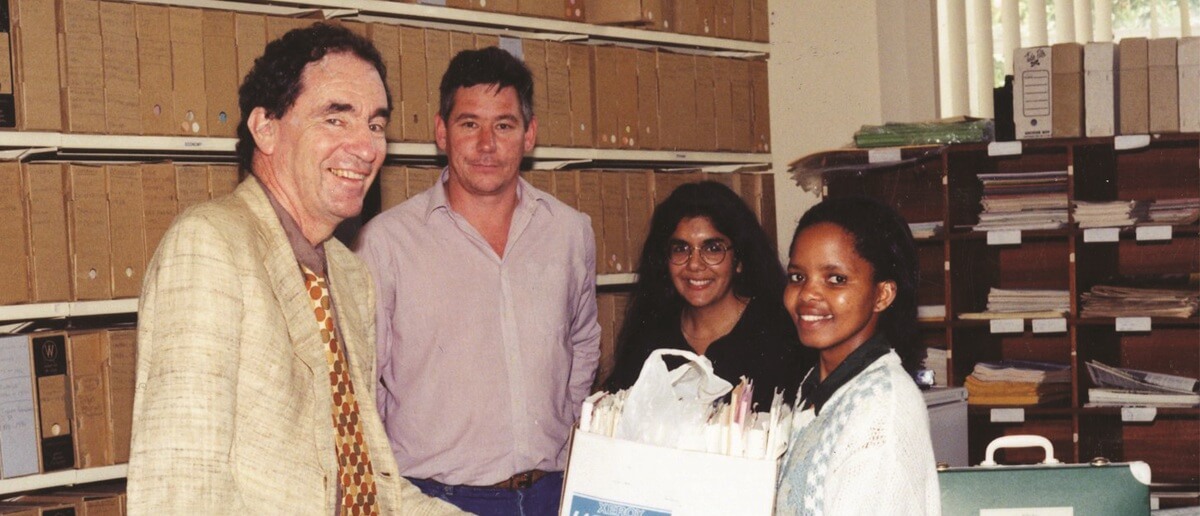 Albie Sachs donating his papers to the Mayibuye Centre
1992
The Centre played an important role in facilitating discussions about how heritage and history could be recorded and presented to audiences in a democratic SA. It published formerly banned books, held conferences and designed numerous exhibitions in cooperation with other institutions. These exhibitions travelled across South Africa, raising public awareness of the liberation struggle and the concept of a just and equitable future.
1993 - 1996
The Mayibuye Centre was deeply involved in the consultative process that gave birth to the Robben Island Museum (RIM). The first democratic elections took place in 1994. RIM would be the first national cultural institution established by the new SA democracy, responsible for the management of Robben Island, now declared a national heritage site. In 1996 the South African Cabinet recommended that the Mayibuye collections form the core of the Robben Island Museum (RIM).
 Exhibitions interpreting Robben Island curated by the Mayibuye Centre in 1993 and 1996
1997 - 2000
By 1997 the Robben Island Museum opened to the public. However it was only in 2000 that the Mayibuye Centre was officially incorporated into Robben Island Museum as its Collections Unit, now know as the UWC Robben Island Mayibuye Archives.
UWC ROBBEN ISLAND
MAYIBUYE ARCHIVE
Responsible for the management and care of the all RIM collections, the UWC Robben Island Mayibuye Archives retains the original location of the Mayibuye Centre, on the University of the Western Cape (UWC) campus.
The collections of the UWC-RIM Mayibuye Archives are researched by both local and international researchers, and while its exhibits are visited by students daily, access to the collections is by appointment.
The collections of the UWC-RIM Mayibuye Archives are researched by both local and international researchers, and while its exhibits are visited by students daily, access to the collections is by appointment.


COLLECTIONS
For management purposes the material in the UWC Robben Island Mayibuye Archives is organised into four main sections: Historical Papers and Books, Photographic collections, Audio-Visual collections and Art and Artefacts.
The Photographic Collections
The images document the visual history of apartheid, liberation movements, forced removals, resettlement, repression, political prisoners, trials, labour and trade unions, women, culture, education, armed struggle.
The Eli Weinberg collection is part of the IDAF collections. It records the struggle against apartheid from the 1940s to the 1970s, covering major events, campaigns and personalities of this period.
The Leon Levson collection documents the social conditions, both rural and urban, in South Africa from the 1940s to the 1960s
The Billy Paddock collection covers the mid to late 1980’s.
The Eli Weinberg collection is part of the IDAF collections. It records the struggle against apartheid from the 1940s to the 1970s, covering major events, campaigns and personalities of this period.
The Leon Levson collection documents the social conditions, both rural and urban, in South Africa from the 1940s to the 1960s
The Billy Paddock collection covers the mid to late 1980’s.
The Audio-Visual collections
The Sound & Oral History collections hold recordings and transcripts of interviews with activists, exiles and former political prisoners, remarkable stories of courage and human suffering. It contains recordings of speeches, lectures, rallies, music, radio broadcasts of the Southern African liberation movements and allied groups.
The core of the Film & Video collections come from IDAF. These productions were networked internationally to raise awareness about the situation in South Africa. The collection includes news and stock footage from film and video production projects.
In 2000 the Mayibuye Archive acquired the Afravision Video Archive, recordings of the mass struggles in South Africa in the 1980s.
The core of the Film & Video collections come from IDAF. These productions were networked internationally to raise awareness about the situation in South Africa. The collection includes news and stock footage from film and video production projects.
In 2000 the Mayibuye Archive acquired the Afravision Video Archive, recordings of the mass struggles in South Africa in the 1980s.
The Art & Artefacts Collections
The Art collection holds a wide range of media including paintings, prints, sculptures and cartoons. South African artists and some of the world’s leading artists of the 1970s and 1980s feature in the collections.
Collections of T-shirts, badges, stickers, banners and posters provide a visual history of mass resistance inside South Africa and within the International Anti-Apartheid Movements.
The Robben Island collections contain unique personal possessions donated or loaned by political prisoners and items left on the Island in the early 1990s. Material issued by the prison authorities and other site based items are held or displayed on Robben Island.
Collections of T-shirts, badges, stickers, banners and posters provide a visual history of mass resistance inside South Africa and within the International Anti-Apartheid Movements.
The Robben Island collections contain unique personal possessions donated or loaned by political prisoners and items left on the Island in the early 1990s. Material issued by the prison authorities and other site based items are held or displayed on Robben Island.
The Historical Papers Collections
This section consists of collections of personal and organisational documents, reflecting the struggle for national liberation in South Africa.
The extensive International Defence and Aid Fund (IDAF) papers collection is organized into three categories, the legal assistance records, the welfare assistance program and the research and information outreach program.
Robben Island Ex-Political Prisoners General Sports and Recreation Committee collection also known as the Apple Box Archives includes priceless items reflecting the prison experience, recorded and maintained (often secretly) by the prisoners themselves.
The extensive International Defence and Aid Fund (IDAF) papers collection is organized into three categories, the legal assistance records, the welfare assistance program and the research and information outreach program.
Robben Island Ex-Political Prisoners General Sports and Recreation Committee collection also known as the Apple Box Archives includes priceless items reflecting the prison experience, recorded and maintained (often secretly) by the prisoners themselves.
DID YOU KNOW?
Mayibuye is a Nguni word which can be translated as ‘let it return’. It was associated with the slogan ‘Mayibuye iAfrika’ which was used as a rallying cry during the liberation struggle.
EXPLORE
Explore selected collections from the UWC RIM Mayibuye Archives.
